
Disney’s “Fairy Tale Business”: When the Dream Factory Becomes a Capital Game
The moment Cinderella puts on the glass slipper, her story has already gone beyond a simple fairy tale and become the starting point of Disney’s business empire. From a small animation studio founded in 1923 to an entertainment giant now valued at over $180 billion, Disney has spent a century building a business loop with IP at its core. Yet once we peel back the sugary coating of dreams, what we see is a precisely calibrated capital machine.
Queue Economics: Turning Waiting Time into Profit
The queuing system at Shanghai Disney Resort is a classic case study in business psychology. In 35°C heat, visitors need to queue for 4.5 hours just to hug LinaBell, and wait 90 minutes to ride TRON Lightcycle Power Run. Behind this experience of “painful yet joyful” waiting lies Disney’s carefully designed “queue economics”.
Disney knows that visitors’ willpower is gradually depleted while they wait, and at that point their spending decisions become far more emotional. That’s why they place large numbers of themed shops and mobile food carts along the queues, prompting guests to spend unconsciously while they wait. Data from 2025 shows that Shanghai Disney’s annual revenue reached 8.8 billion RMB, with ticket sales accounting for only 40% and the remaining 60% coming from food and beverage, merchandise and paid services.
Even more striking is that Disney has turned queuing itself into a premium commodity. By launching “Priority Access” and “VIP Tour” services, they have put a clear price tag on waiting time: a fast‑pass for a popular attraction costs 80 RMB, while a bundle of 8 priority entries is priced at 440 RMB. This strategy of “monetizing time” gives paying visitors a sense of privilege, while making ordinary guests increasingly anxious as they wait—anxiety that in turn fuels more “comfort spending”.
The Streaming Dilemma: From Cash‑Burning Growth to Price‑for‑Volume
Disney’s Q1 2026 financial report shows that its streaming business turned a profit for the first time, with revenue of $5.64 billion and profit of $47 million. However, behind this seemingly impressive report lies a clear bottleneck in user growth. Disney announced it would no longer disclose subscriber numbers, a decision widely interpreted by the market as an attempt to cover up slowing growth.
In India, Disney lost more than one‑third of its users after losing the rights to cricket broadcasting; in North America, subscribers declined for two consecutive quarters, with 700,000 users lost in Q4 2025 alone. To maintain profitability, Disney has had to switch to a “price‑for‑volume” strategy, raising the price of its ad‑free plan in North America to $19 per month while introducing lower‑priced ad‑supported tiers. Although this approach has increased ARPU in the short term, it has also put pressure on user retention.
Runaway content costs are another major challenge facing Disney’s streaming business. In Q1 2026, Disney released nine films, including “Avatar: The Fire Fortress”, which alone cost $500 million to produce. Despite management’s repeated emphasis on “cost control and efficiency”, the imbalance between content investment and returns remains severe. In 2023, four big‑budget films together lost nearly $1 billion, a figure that starkly illustrates Disney’s reckless expansion in content production.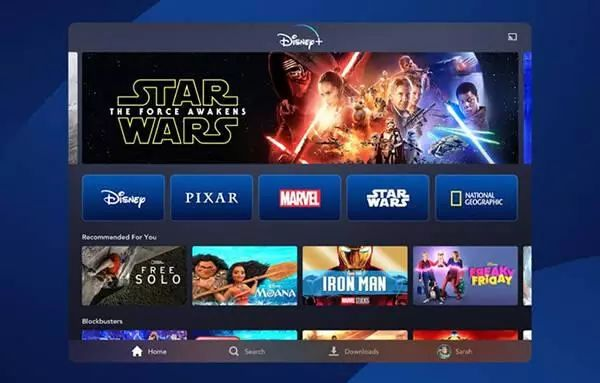
The IP Business Loop: Monetizing the Full Value Chain from Content to Experience
Disney’s business empire is built on a powerful IP matrix. By acquiring Pixar, Marvel, Lucasfilm and 20th Century Fox, Disney gained access to top‑tier franchises such as “Toy Story”, “The Avengers”, “Star Wars” and “Avatar”. These IPs not only bring in box office revenue, they are the core assets driving monetization across Disney’s entire value chain.
Disney’s business loop can be summarized in three layers: content creation, channel distribution and physical experience. At the content layer, Disney continually strengthens the influence of its IP through films, animation and series. At the distribution layer, it delivers content to global audiences via streaming platforms like Disney+, Hulu and ESPN+. At the physical experience layer, Disney transforms virtual IP into real‑world consumption scenarios through theme parks, resorts and cruise lines.
In fiscal year 2025, Disney’s Experiences segment generated $36.156 billion in revenue, accounting for 38% of total revenue, with an operating margin as high as 27.6%. The “Zootopia” themed land at Shanghai Disney is a textbook example: after it opened, hotel prices in the surrounding area tripled, and annual sales of Elsa dresses exceeded 4 million units. This “content‑experience‑consumer products” loop enables Disney to maximize the commercial value of its IP.
Future Challenges: IP Fatigue and Technological Disruption
Despite Disney’s powerful IP portfolio, signs of IP fatigue are already emerging. The Marvel and Star Wars franchises have failed to replicate their early growth miracles, and Disney+ subscriber growth slowed to single digits in 2023. Over‑reliance on legacy IP has led to a lack of innovation; in 2023, films like “Ant‑Man and the Wasp: Quantumania” and “The Little Mermaid” suffered from poor word of mouth and dragged down box office performance.
Technological shifts are also eroding Disney’s traditional content moat. In 2026, Disney made a strategic investment in OpenAI and licensed over 200 classic character IPs for use in the Sora model’s content generation. While this move attempts to bring UGC under the official umbrella, it may further weaken the scarcity of exclusive content. As generative AI develops, ordinary users can increasingly create high‑quality derivative works, posing a potential threat to Disney’s dominance over IP‑based content.
Conclusion: Balancing Fairy Tales and Capital
Disney’s success lies in its ability to perfectly fuse fairy tales with capital. It uses dream‑like stories to attract audiences and precise business strategies to generate profit. Yet when the power of capital becomes too great, the innocence of the fairy tale is inevitably at risk of being eroded.
Disney must find a balance between commercial interests and user experience. Excessive commercialization can make users feel exploited and weaken brand loyalty. At the same time, Disney needs to keep innovating and launching new IPs and content to counteract audience fatigue and technological disruption.
In this rapidly changing era, Disney’s “fairy tale business” faces unprecedented challenges. Whether it can continue to maintain the allure of a dream factory while achieving commercial success will depend on whether it can find a new balance point between capital and fairy tales. After all, once a fairy tale degenerates into a pure capital game, its magic will inevitably fade away.